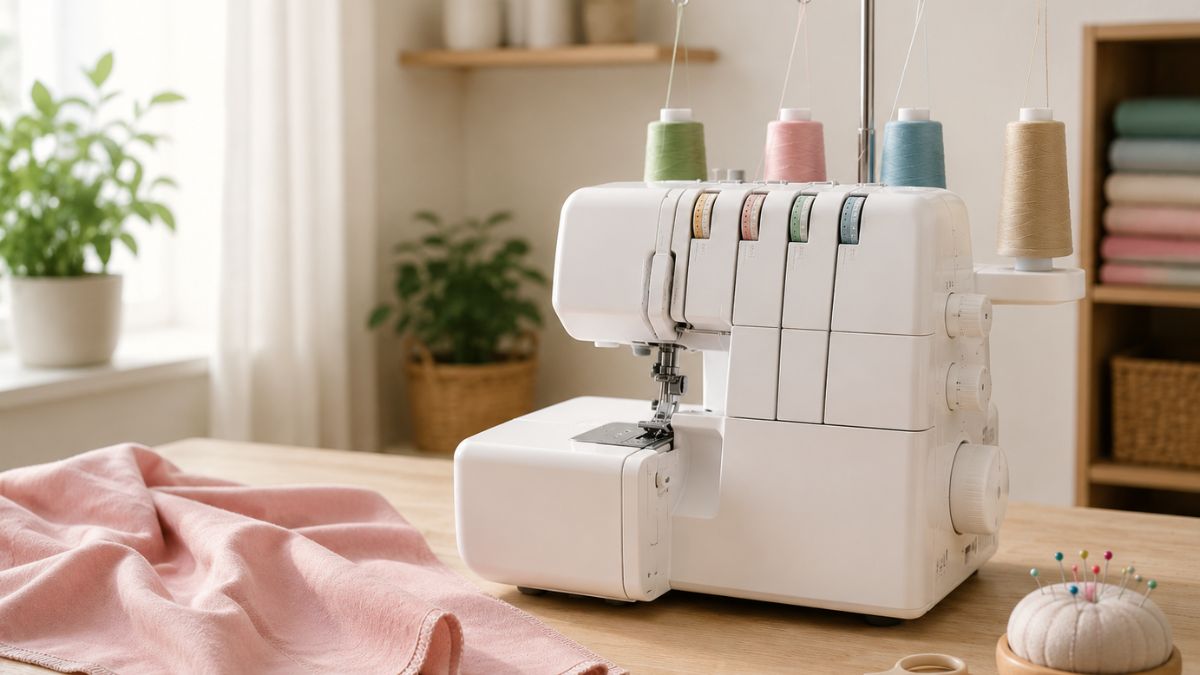
Introduction
Shopping for your first serger can feel surprisingly overwhelming.
Within a few minutes of researching, you’ll likely come across terms like differential feed, rolled hems, flatlock stitches, 2-thread stitching, and 4-thread stitching. Add dozens of machine models, conflicting advice, and feature lists that seem written for experienced sewists, and it’s easy to feel stuck before you’ve even made a decision.
The good news is that choosing a beginner friendly serger doesn’t have to be complicated.
Many new sewists assume they need the machine with the most features, the highest price tag, or the longest list of stitch options. In reality, your first serger should help you learn confidently and enjoy the sewing process. The best machine for a beginner is often the one that’s easiest to understand and use consistently.
In this guide, we’ll look at seven important things worth considering before buying your first serger so you can make a confident decision and avoid spending money on features you may never use.
1. Understand What a Serger Is Designed to Do
One of the biggest mistakes beginners make is expecting a serger to replace a regular sewing machine.
While both machines sew fabric together, they serve different purposes.
A sewing machine is designed for general construction. You can sew seams, install zippers, make buttonholes, topstitch, and complete an entire garment using only a sewing machine. A serger, on the other hand, specializes in finishing seams and working with certain types of fabrics, particularly knits and stretchy materials. It trims fabric edges while sewing, creating clean, professional-looking finishes that resemble the inside of ready-to-wear clothing.
If you’ve ever turned a store-bought T-shirt inside out and noticed neat thread loops wrapping around the seam allowance, you’ve already seen what a serger can do. Many sewists eventually own both machines because they complement each other. The sewing machine handles construction details, while the serger speeds up sewing and creates polished seam finishes.
Understanding this difference before you buy can help set realistic expectations and prevent disappointment later.